How Learning to Navigate the Keikyu Line in Japan Helped Push Me Out of My Comfort Zone

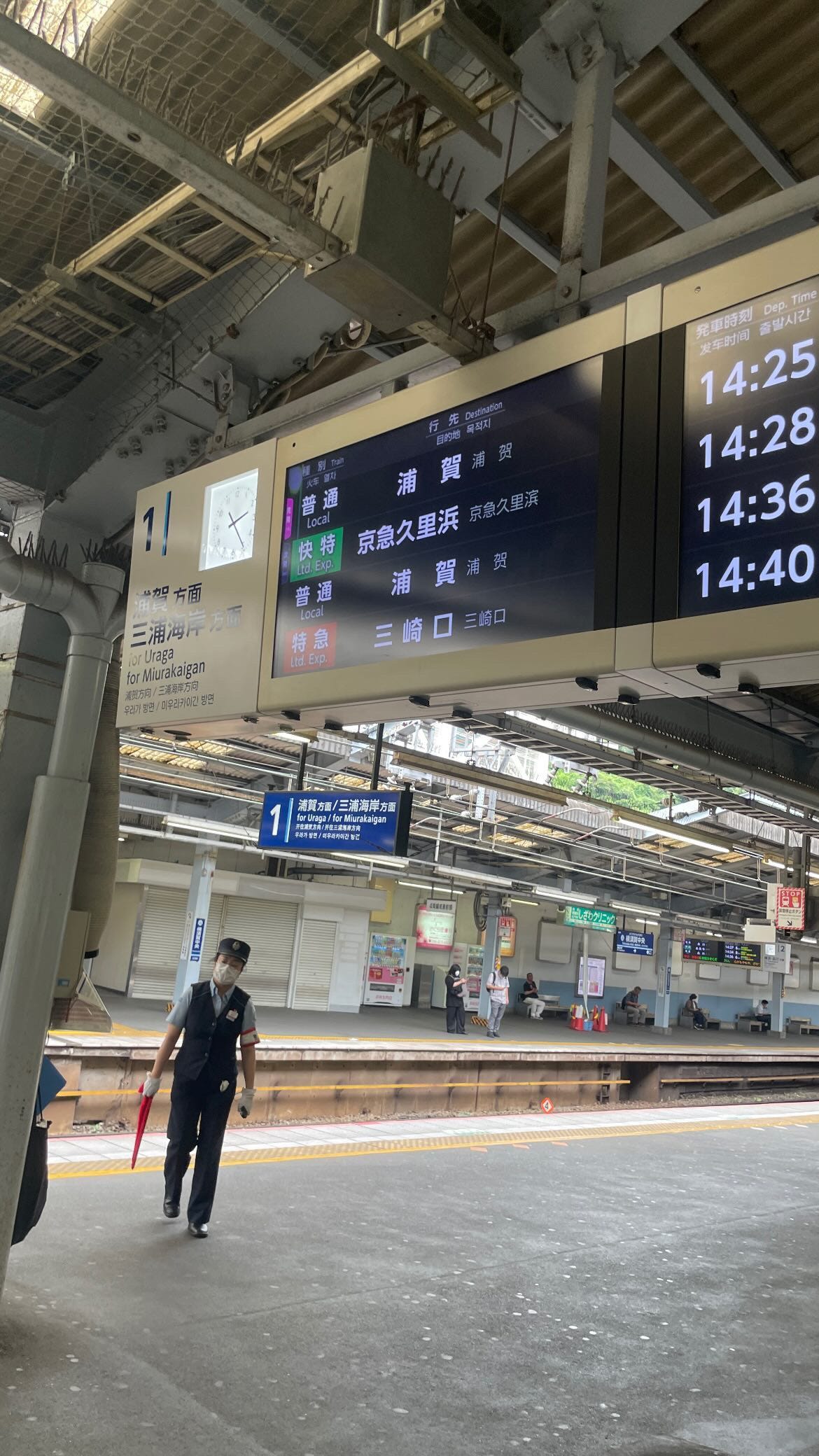
I don’t know how to take the Marta – the bus or the train. I’ve only been on the train back home in Atlanta maybe three times in my entire 34 years. Each time, I was with someone else who knew where they were going. For one, I’ve never lived where the train runs. I’ve always lived just right outside or too far outside of the perimeter, and we all know Atlanta isn’t built for public transportation the way other major cities are. For two, I’ve been blessed enough to always have a car, so I never needed to figure out how to get around without one. Even when I didn’t have a car for a year or two, Uber and Lyft were available. For three, I would sit in a corner and cry if I had to figure out how to navigate around Atlanta. I hate sitting in the Atlanta traffic, so I couldn’t even imagine having to figure out the various routes for the train or bus. As an easily overwhelmed introvert, figuring out public transportation just has never been a goal of mine.
Fast forward to the past month that I’ve been living in Japan. There’s no getting around learning how to use the train here. You’re either going to walk everywhere (and in the summer, have fun with that b/c it is HOT and HUMID here), buy a car and pay all the tolls on your commutes, or learn how to use the train. Can you call a taxi or an Uber? Yes. Will it cost you? Absolutely. It’s still more efficient and cost-effective to use the train. Average rides, depending on distance, of course, will cost about ¥300-600 ($1.86-$3.73) roundtrip. From Yokosuka to Zushi Beach and back cost me about ¥662. That’s ¥313 ($1.95) each way. To go from Maborikaigan Station to Shiori Station to go to the mall, the Honch (a street lined with American and Japanese bars), or the nail salon where I can get the perfect pedicure only costs about ¥360. That’s ¥180 ($1.12) and back. I’ve even calculated my trip to Tokyo for next week. The trip is 1 hour and 35 minutes from where I’m staying, and it will only cost me about ¥1722 roundtrip ($10.70). This is much more affordable than taking a taxi or Uber into Tokyo or anywhere else for that matter. It’s much more affordable than having a car and paying the many, many tolls that line the highways. As much as I wanted to fight it, the train is the best means of transportation here, and it’s not that hard to learn.
Google Maps has helped tremendously. I was nervous for the first few days after arriving, paralyzed by the language and location barrier. I didn’t know where I was or how to get where I wanted to go, so I sat in the house in fear. That, and I was sick for a few days after arriving. I was only willing to go places I could walk to, even with the heat and humidity. The more I started to trust GPS to get me around while walking, the more I trusted myself to finally get on the train. Learning you can use Google Maps just like you use it at home gave me some comfort. Enter your destination. Follow the directions for walking toward your train station, entering the train station, following the time your train will arrive and depart, and what platform you need to enter. Get familiar with the closest train station depending upon where you’ll be staying and with how to get there via walking or bus. Scan your prepaid physical pay card or the one you have loaded to your Apple Pay to gain entrance. Pay attention to and get familiar with the platforms to make sure you’re headed in the right direction according to Google Maps. Navigate to the correct platform and wait there for your train, either standing or in the seats provided at certain stations. GPS will tell you exactly what time your train is to arrive and depart from the designated platform so that you can board it without confusion.
The beautiful thing about Google Maps is that not only does it give you the time it takes to get to the station, the arrival/departure time for your train, and the proper platform for your train, it tells you how many stops it will take to get to your destination or the next station you’ll need to use to transfer trains. The blue arrow on the left side of the screen will move down and tell you how many stops you have left before you’ll need to exit the train. Pay attention and depart when prompted. The GPS is so detailed that it will also tell you which exits to take once you get where you need to go (ex: South Exit, West Exit). The signs in the train stations are in Japanese and English. They are very precise. Google Maps has yet to fail me, no matter how close or far I’ve traveled from my home base. It even tells you when to transform trains and switch platforms. One thing I have learned when switching platforms is that sometimes you only have like 2 minutes to get to the next platform from the one you’re exiting, so put some pep in your step or you’ll be waiting on the next train that may not come for another 15 minutes.
Now, there are several prepaid cards you can choose from while traveling around Japan. DO YOUR RESEARCH. You need to know where you’ll be staying and where you’ll want to travel. Then, do your research to determine which card is best for the various regions. I had an IC card (Icoca card) ordered with a preloaded ¥1000 when I first arrived. The top three major prepaid and rechargeable transit cards are Suica, Pasmo, and Icoca cards. Suica cards are for the JR trains in the greater Tokyo, Nigata, and Sendai regions. Pasmo is a prepaid and rechargeable card for Tokyo’s railway, subway, outskirt regions, and bus operators. You can even use Pasmo like Apple Pay here, adding money to use at shops, restaurants, and designated vending machines. The Icoca card is a prepaid, rechargeable card for JR trains in Kansai, Osaka, and Kyoto. I use it for the local Keikyu Line. You can purchase these cards. You can add them to your Apple Pay. You can add yen to these cards electronically, in person at the train station kiosks located as soon as you enter, or in person with the train attendants at the counter. Keep up with how much money you have preloaded on your card. It will update each time you finish your trips. For me, my Icoca card is loaded to my Apple Pay. I open my Apple Pay each time I enter to scan my phone for entrance to the train station then again when I’m exiting my final destination. My phone updates my current balance immediately after I finish each complete trip.
I’ve had to add yen twice since I’ve been here so far. I gave the attendant direct change based on how much I wanted to be loaded onto my card. My Japanese isn’t the best, but I smiled, handed my open Icoca card on Apple Pay on my phone to the attendant to place on the scanner, and the exact amount of money I wanted to be loaded. He knew what to do. He pointed to the money and then to the phone, and I nodded. He loaded the money, and I was good to go. The card was updated with the new balance immediately on my phone.
Once I took my first couple of short trips and got used to being able to go back and forth to a direct destination, I became more comfortable going to further destinations that required switching platforms and transferring trains. I’ve been forced out of my comfort zone, and I’m better for it. To come to a country where I don’t know the native language (I’m actively attempting to learn and converse with people) and be able to learn how to navigate the train system alone has made me appreciate myself and my ability to adapt quickly. I’ve proven to myself that I can do hard things. I can learn new things. I talk so much about wanting to travel the world, and now I know I can figure out my way around new countries, cities, and towns. I can trust myself to travel the world and be just fine. That is what I needed to know when I decided to come to Japan for an extended amount of time, and I’ve accomplished that part of my mission.
I’m proud of myself for doing something that would normally terrify me. I deserve this growth, learning, and joy. I deserve experiences that show me how adventurous I am. I’m here to tell anyone doubting how capable they are of doing the same that you can do all things. You can do big things. You can do scary things, things you may not have been able to do even two months prior. You will be surprised at yourself for stepping out of what you’re used to so that you can embrace the things you say you want for yourself. Expand. Grow. Be bold and courageous. You’ll be so impressed with yourself and add more to your life experience than you ever imagined.